

Fixing Honey-Bound Hives
A honey-bound hive is one that has brought in so much nectar or stored so much syrup that it has run out of room to store it. As a result, the bees begin filling the brood nest with honey or syrup until the queen has nowhere left to lay eggs.
This is very detrimental to a colony because the queen can no longer lay enough eggs to sustain the hive. A honey-bound hive will often begin to dwindle in population and can eventually die if the beekeeper doesn't intervene.
Some Basic Facts
- Honey-bound hives occur only when a colony has run out of room to store nectar or syrup.
- From February through September, the queen should always have multiple frames of brood in the lower brood box or multiple frames available for her to lay in.
- The only time it's OK for a hive to begin filling the brood nest with significant amounts of syrup is in late fall, as the colony naturally begins shutting down for winter. Even then, there should still be some brood frames with at least 50% of the cells available for the queen to lay.
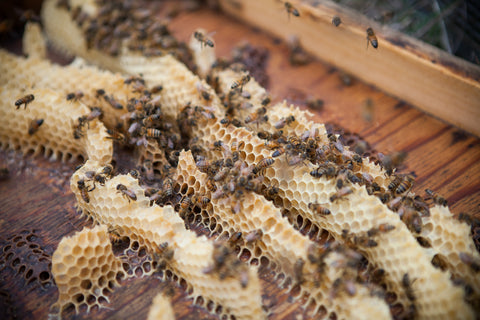
Identifying a Honey-Bound Hive
Keeping those things in mind, here are a few indicators to look for:
- All of the boxes above the first brood box are completely full of honey.
- It is between February and September, the lower brood box has multiple frames of capped honey and only a few frames of brood, and the open cells within those brood frames are filled with nectar or syrup.
- There are no open cells available for the queen to lay in throughout the brood nest.
- The bees are drawing excessive burr comb throughout the hive.
- You have been feeding heavily for an extended period, or there is a strong honey flow.

Fixing a Honey-Bound Hive
Often, hives fall somewhere between partially and completely honey-bound. If your hive still has three to four frames of brood in the lower box but the upper boxes are full and the rest of the lower box is packed with honey, it's often enough to simply add another box and stop feeding if you're feeding syrup. The bees will usually move honey up into the new box, opening space for the queen to lay.
If your hive is severely honey-bound, here's a simple and effective way to fix it:
- Remove two frames of honey from either side of the brood nest in the lower box.
- Place those frames at least 20 feet away from your hives and allow the bees to rob them out. Depending on the weather and available forage, this may take less than an hour or as long as a day.
- Return the now-empty frames to the hive on either side of the brood nest.
- Add an empty box to give the bees more storage space.
- Stop feeding if you have been feeding syrup.
These steps will typically solve a honey-bound hive.
Don't forget to continue monitoring your food stores. Just because a hive had an excess of honey today doesn't mean it will tomorrow. It takes roughly two frames of nectar or syrup to produce one frame of brood, so a strong colony can go through food surprisingly fast.
Check out this video I recorded last October. Although it focuses on fall management, the same principles apply.
Why feed if you don't have to? We often assume that, because there's a nectar dearth, we should automatically feed, but that's not always the case. This short video will give you a clear picture of what sufficient honey stores actually look like.
Pollen-Bound Hives
Pollen-bound hives are much less common but can occur in areas with exceptionally heavy pollen flows. This is usually seen in the fall, when colonies are raising less brood (and therefore need less pollen) but are bringing in tremendous amounts from a strong fall pollen flow.
A pollen-bound hive is very similar to a honey-bound hive. The bees store so much pollen throughout the brood nest that the queen begins running out of room to lay eggs.
The solution is simple: remove a few frames that are heavily packed with pollen and replace them with empty drawn comb. The pollen frames can be stored and returned to a colony the following spring to help jump-start brood production and population growth.
For healthier hives year-round, feed Stan's Soft Sugar Bricks—a proprietary blend of natural, organic ingredients containing both carbohydrates and protein in the form of real pollen.
